Automate Lead Generation with AI: How a Lead Agent Works
 Von Manuel Gick·Certified AI & Automation Expert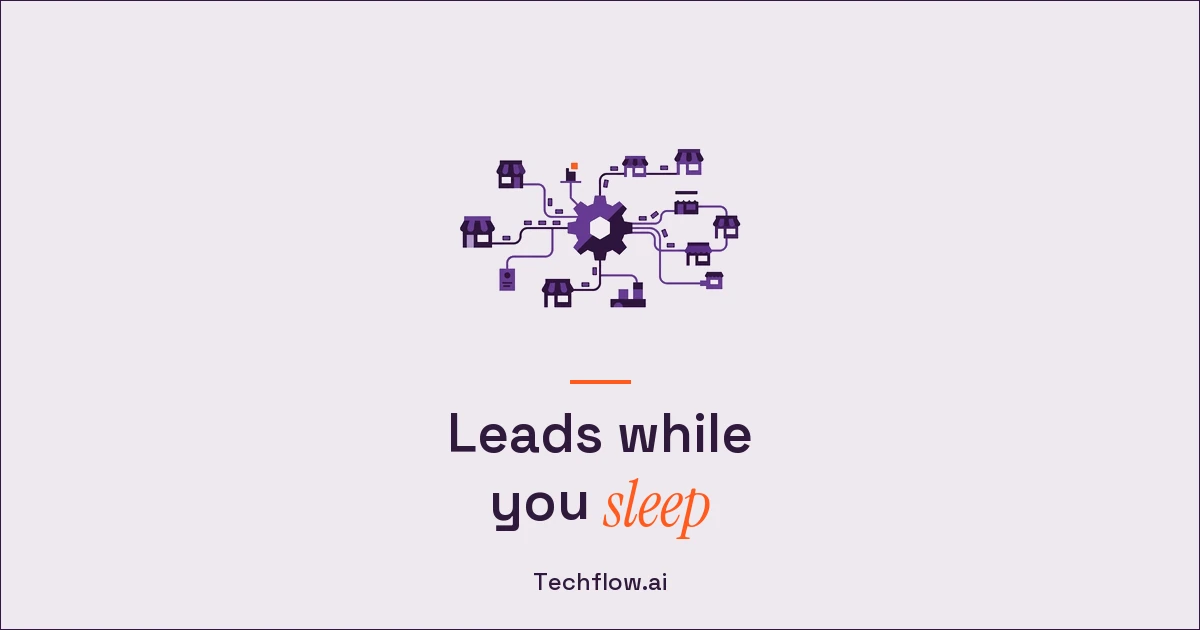
Ask someone in sales what they were hired for. The answer: having conversations, building relationships, closing. Then look at their calendar. It says: googling companies, clicking through websites, hunting for the right contact, typing data into the CRM, drafting outreach, managing follow-up reminders. The research eats the time sales actually exists for. That's exactly where a lead agent comes in – a digital employee that takes over the grunt work before and after the conversation. How that works, how you set one up and what's legally allowed along the way (and what isn't) – step by step.
What a lead agent takes over – and what it doesn't

A lead agent isn't a single miracle tool. It's a chain of steps that a human usually does by hand today:
- Research. The agent scans public sources for companies that match your profile – industry, size, region, concrete triggers like job postings or expansion. That's automated lead research: instead of a bought list, a continuously maintained one that actually fits you.
- Enrichment. For every hit, it gathers context: what the company does, who the right contact is, what's currently happening there. A company name becomes a file.
- Scoring. The agent rates every lead against criteria you define. Your sales team starts the morning with the twenty most promising contacts – not with a list of five hundred.
- First-outreach drafts. The agent writes personalized drafts – based on the file, in your tone. The key word: drafts. A human reads, adjusts, approves. Why that's not a compromise but the only clean way to do it is in the legal section below.
- Follow-up. No reply after a week? The agent reminds, resurfaces the contact, drafts the follow-up message. Nothing fizzles out anymore just because an inbox was full.
Bottom line: for a lead agent, we calculate a lever of 4 to 8 hours per week won back – research and admin time, not conversation time.
What the agent does not take over: the conversation, the offer, the decision. And – per our firm recommendation – not sending without approval. A lead agent makes your sales work faster. It doesn't replace it.
Setting up an AI lead agent: the 5 steps
If you're asking "how do I automate lead generation with AI?", the answer isn't a tool recommendation – it's a process. These five steps always apply, whether you build it yourself or have it built:
- Analysis. Look at the current state before anything gets built. Where do leads come from today? Who researches, for how long, in which systems? Without those numbers, you won't know afterwards whether the agent achieved anything.
- Concept. Define in writing what your ideal customer looks like and how the agent recognizes them. Decide where the approval steps sit – who sees drafts, who signs off. And only now pick the tool: Make.com or n8n for the connections, Langdock for team-wide AI access, custom code where none of that fits. The tool follows the problem – not the other way around.
- Build. The agent gets built and docked onto your systems – CRM, email inbox, calendar. Your systems stay; the agent joins them.
- Test. Run the agent in parallel before it takes over. Check the drafts critically: are the facts in the research correct? Does the outreach sound like you – or like a machine? For lead agents, this is the most important step, because an embarrassingly wrong "personalized" message costs more trust than none at all.
- Go-live and fine-tuning. The agent runs in production, your team works with the drafts – and in the first weeks you adjust: scoring criteria, tone, frequency.
Can you do this yourself? Honest answer: partly, yes. If your CRM is widespread and the logic is manageable, Make.com or n8n plus some patience will get you far. Experience shows, though: in DIY builds, steps 1, 2 and 4 tend to get skipped – and that's exactly where it's decided whether the agent delivers hours or just activity. If you'd rather have it built: this is precisely the pattern our SCALE² sprint follows – three weeks, five phases, a fixed price of €2,500 to €13,000, three weeks of post-go-live support included. How such a sprint runs in detail is in the article having AI agents developed.
Automating personalized cold outreach: what's actually legal
Now the section many vendors leave out. Upfront: we're not lawyers and this is not legal advice – but you should know these principles before you automate anything. They're shaped by German law, where we and most of our clients operate.
Cold marketing emails without consent are generally prohibited in Germany – B2B included. That's Section 7 of the German Act Against Unfair Competition (UWG): email marketing requires the recipient's prior express consent. "It's B2B, so it's fine" is a myth that regularly ends in costly cease-and-desist letters. There's a narrow exception for existing customer relationships – it does not cover genuine cold outreach.
What works instead:
- Phone in B2B. Permitted when so-called presumed consent applies – simplified: when the company could plausibly have a genuine business interest in your offer. The agent delivers the research and the call file; the human makes the call.
- Postal mail. Old-fashioned, legally the most relaxed channel – and precisely because hardly anyone uses it anymore, it stands out.
- LinkedIn. A professional network where people want to be reachable for business contacts. The same rule applies: individual, relevant, in moderation. Mass messages violate the platform's rules – and burn your name.
- Email with consent. Anyone who signed up via a form, an event or a lead magnet may be contacted. The agent helps document those consents cleanly and respond fast.
On top of that sits the GDPR: the agent may only process data that's genuinely needed for the outreach – from accessible sources, with a clear rule for when it gets deleted again.
What does that mean for automation? A lead agent that blasts out cold emails at scale isn't a sales tool – it's a legal warning letter on a time delay. A lead agent that researches, prioritizes and prepares drafts for the legally clean channels is something else entirely: it makes good sales work faster instead of scaling bad sales work. That's exactly how we build it – with approval steps, not autopilot. And when in doubt, the specific campaign belongs in front of a specialized lawyer first. That's an honest answer too.
Which tool handles the first outreach to leads automatically?
The honest answer: a tool that sends cold first outreach fully automatically is one you shouldn't use – by email, that's prohibited without consent in Germany (Section 7 UWG), and quality-wise, recipients spot the autopilot fast. What works well: an agent built on Make.com, n8n or Langdock that prepares the first outreach – researches, prioritizes, writes personalized drafts – while a human approves. That's how we build our lead agents.
Can I automate personalized cold outreach?
The groundwork: yes, completely. Research, enrichment, scoring and drafts can all be automated – that's the part that eats the most time. Sending cold emails without consent: no. That's not a question of tooling but of the law – personalization doesn't replace consent. For phone, postal mail and LinkedIn in B2B, the agent delivers the perfect template; a human takes the final step.
How does automated lead research work?
The agent scans public sources – websites, registers, job boards, industry directories – for companies matching your criteria: industry, size, region, concrete triggers. It checks hits against your CRM so no duplicates arise, enriches them with context and files them scored. Your sales team gets a prioritized list instead of a research assignment.
How do I set up an AI lead agent?
In five steps: analyze the current state, define the target profile and approvals in writing, pick the tool and dock it onto CRM and inbox, test in parallel, go live and fine-tune. With widespread systems and manageable logic you can set this up yourself no-code – or have it built in a three-week sprint, with three weeks of post-go-live support included. The details are above in the article.
The next step
Whether a lead agent is the right first lever for your sales – or another process should come first – is what we settle in the time-potential analysis: 45 minutes, free, no sales pitch. We ourselves run on 40+ of our own AI agents internally – so we don't recommend anything we don't use ourselves. What else our AI agents take over is on our AI agents services page. Ready? Book your time-potential analysis.