Sales Without a CRM: From One Excel Sheet to a Pipeline That Follows Up by Itself
Four people, customers worldwide, everything in Excel: coating specialist staltec got a CRM with two pipelines and automatic reminders. Two months after the sprint, sales runs almost entirely in it: around 120 deals, no more Excel.
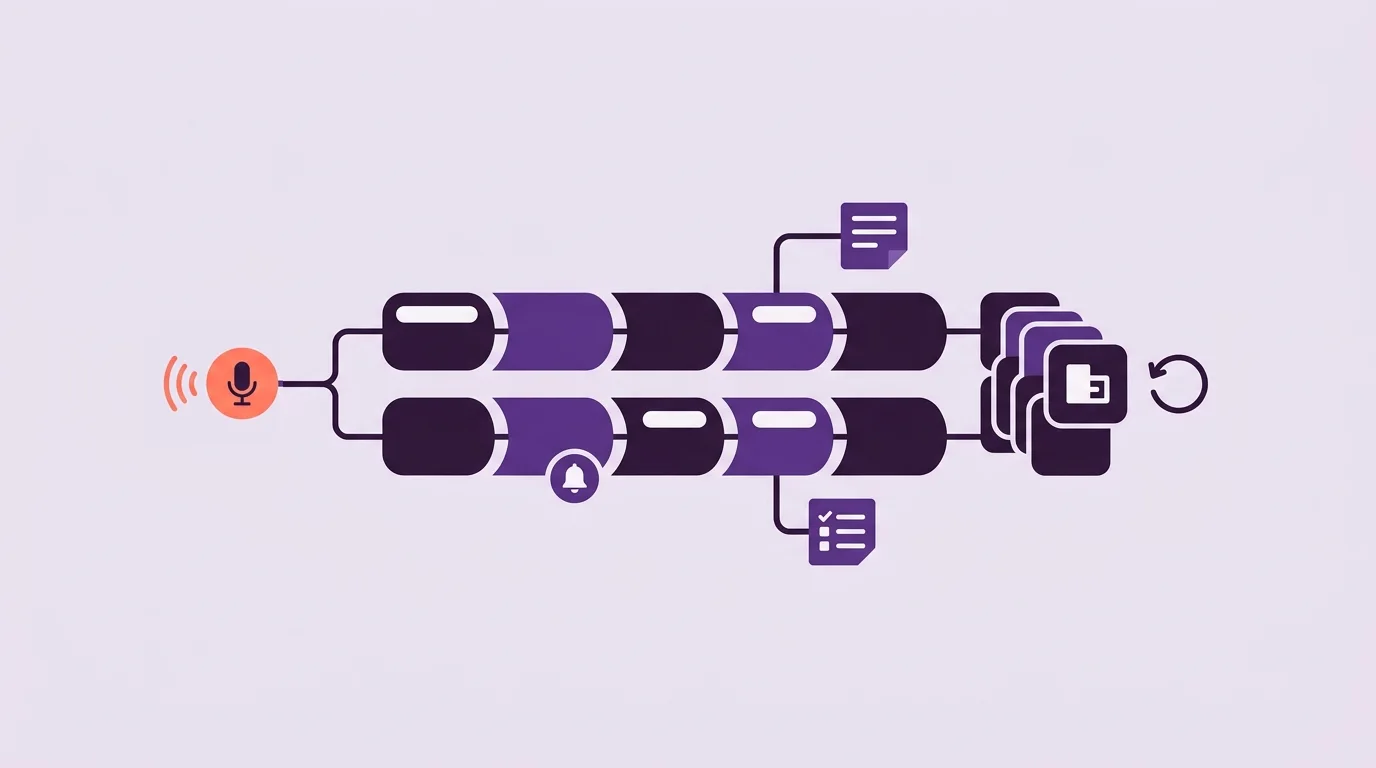
Where the time was going.
Based in Meerbusch, Germany, staltec GmbH specializes in coating technology for galvanizing lines. Its rolls and coatings run in steel and aluminum plants around the world. Sales is handled by the leadership team itself: four people. Europe, Asia and South America are served directly; business in the US and Canada runs through a local licensing partner managed from within the team.
As specialized as the product is, the sales process was just as manual: no CRM. Quotations were created from one central Excel sheet, customer history lived in email inboxes, knowledge lived in heads. New enquiries came almost exclusively through the personal network. What makes a good lead wasn't written down anywhere.
The biggest time sink wasn't the work on the quotation itself. At staltec, that often takes minutes. It was the waiting: for customer drawings, for supplier prices, for feedback from the partner. Lead times of weeks, and nothing automatically reminded anyone to follow up.
"If you just consider the real working time on the offer, you could talk about minutes. But it's all about waiting. Waiting, waiting, waiting, waiting." – Micha Umfahrer, CFO, staltec GmbH
An earlier CRM attempt on their own had stalled next to day-to-day business. And why a deal was ultimately lost wasn't recorded anywhere.
The biggest challenges
- No CRM: quotations and customer history in Excel and email inboxes
- Follow-ups from memory, no automatic reminders
- Weeks of waiting for drawings, prices and partner feedback
- No documented criteria for what makes a good lead
- Loss reasons entirely undocumented
- A do-it-yourself CRM attempt had stalled next to daily business
What we built.
Understand first, build second: the project started with an on-site workshop in four parts (leads, contact, offer, closing) with the whole team, run together with our partner Kreationswerk. After that, five remote sessions captured every process step in detail: triggers, data, exceptions. Because of that scope, the project was planned as a six-week sprint from the start.
The most important decision: the CRM has to serve the team, not the other way around. Four salespeople with full calendars won't maintain a system that creates work. So every step got a clear rule, and following up became the system's job.
The building blocks
- HubSpot CRM with two market-specific pipelines: direct business (Europe, Latin America, Asia) and licensing business through the US partner, with its own stage for partner offers
- Traffic-light qualification: defined criteria instead of gut feeling
- Structured deal capture based on MEDDPICC: decision-makers, buying process, loss reasons
- Four automatic reminder sequences (customer drawing, supplier offer, designer drawing, partner feedback): the system follows up, not someone's memory
- An AI agent on the CRM as an input shortcut: a voice or text note, and the agent updates the deal, structured fields included
- WhatsApp Business connection set up in the CRM (a standard HubSpot feature)
- Email logging from Outlook: assign a conversation to a deal once in the Outlook add-in, and the rest of the communication is logged automatically
- A data model for group accounts: parent company and sites as linked company records. Background workflows automatically attach every deal to both the site and the parent company; contacts are matched by email domain
- All existing data cleaned and prepared before the import: duplicates removed, structure optimized, plus deal tags by product group and a Kanban view
"With Claude, this worked really well. Creating a deal wasn't that complicated." – Dennis Bollien, CEO, staltec GmbH
What it delivered.
After six weeks of everyday use, the verdict in the final review was unanimous: the team has a substantially better overview of pipeline, quotations, follow-ups and handovers than the Excel sheet ever offered.
"We simply didn't have the capacity to run a CRM project next to daily business. Techflow got us live quickly, and today HubSpot is just how we work: all customers, meetings and deals in one place." – Renan Matos, CTO, staltec GmbH
Two months after the sprint, sales runs almost entirely in the CRM. Every customer is in, meetings are planned and logged there, and the old data has been migrated. Excel and memory are no longer the standard. What the team uses most are the Kanban view and the reminders: who to chase used to live in inboxes and personal notes. Now the system says so. Add a weekly deal meeting and a daily look at HubSpot, and nothing gets lost anymore.
"For me, it's much better to see the pipeline overall and control the quotations. I think I was already getting lost. In Excel, I could not really track easily. Now I can track much better what's in which phase." – Renan Matos, CTO, staltec GmbH
To be honest about one thing: the custom agent for structured deal capture is not used much in daily work at the moment. For AI-assisted input, the team works directly through the connection between Claude and HubSpot. And nobody measured hours, because there was nothing to measure before. What the team describes instead: it is growing, handling many more customers than before the project, and the old way simply wouldn't work at this scale.
The numbers
Before:
- Quotations from one central Excel sheet, the overview kept slipping away
- Follow-ups from memory and personal notes
- Loss reasons documented nowhere
- Customer history scattered across heads and inboxes
- No pipeline number, because there was no pipeline
After:
- Around 120 deals in the CRM, three pipelines, around 85 of them active
- Four reminder sequences follow up automatically
- Decision-makers and loss reasons structured on the deal
- A weekly deal meeting plus a daily routine in HubSpot
- Almost all of sales in the CRM, no more Excel
Where it goes from here.
From day one, the team's stated goal was to give four people the capacity of eight: more capacity for the existing team, not fewer people. That is exactly what is happening now. And the team keeps building on its own: a third pipeline for the US partner's service business and adjusted company layouts were set up by Renan without us. That is how it should be. The system belongs to staltec, and every further process builds on the same shared data.
Ready to automate your sales? The Time Radar shows you in 60 seconds which process should come first for you, free. Or book the free Time Potential Analysis straight away: 45 minutes, no sales pitch.