Bookkeeping Automated: From Roughly 60 to 15 Hours a Month
The client: ourselves – the most critical one we have. Our own bookkeeping runs on SevDesk around 90% fully automated, including billing and invoicing. An estimated 60 hours a month became about 15.
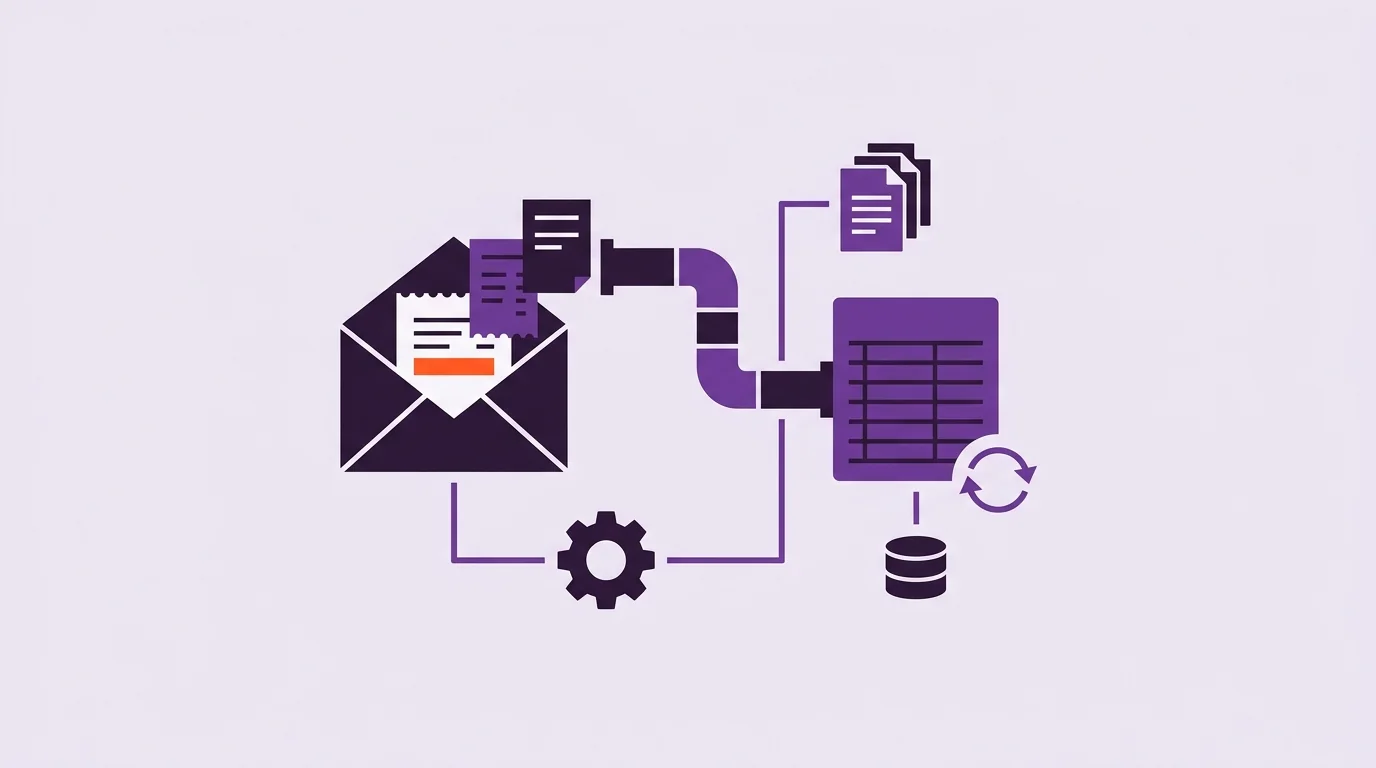
Where the time was going.
Before we tell clients what automation can do, we hold up our own numbers: our bookkeeping looked like it does in any business. Receipts sat in email attachments and portals, someone downloaded, typed, matched – and at month's end went hunting for the payment a receipt belonged to. On top of that: billing and invoicing, every month again.
Without automation, our estimate is roughly 60 hours a month – more than a full working week, tied up in work that follows fixed rules:
The biggest challenges
- Collecting receipts from emails and portals
- Typing in data by hand
- Matching every receipt to the right bank transaction
- Untangling transfers between accounts at month's end
- Billing and invoicing done manually
- Questions like "Is a receipt missing here?" – every time a search instead of an answer
What we built.
The centre is SevDesk – around it, an automation that takes over the grunt work:
The building blocks
- Receipts extracted from emails automatically: when an invoice arrives by email, the receipt in the attachment is detected and read out – amount, date, sender.
- Created as a receipt in SevDesk: no downloading, no typing.
- Linked to the matching transaction: receipt and bank movement find each other automatically.
- Transfers recognized automatically: movements between our own accounts are detected and linked – the classic that otherwise produces question marks on the bank statement.
- A bookkeeping agent as the answers layer: in Langdock, we built our own AI agent with access to SevDesk, our bank account and our email inbox, with bookkeeping and tax knowledge (chart of accounts, income, VAT and trade tax rules) stored as its knowledge base. Questions like "Is there a receipt for this payment?" it answers straight from the real data. Decisions stay with a human – binding tax advice still comes only from the tax advisor.
What it delivered.
Around 90% of the bookkeeping now runs fully automated. An estimated 60 hours a month became about 15 – around 45 hours back, minus 75%. More than a full working week, every month.
The numbers
- From roughly 60 to about 15 hours of bookkeeping per month
- Around 45 hours back every month – minus 75%
- Receipts flow automatically from email to linked transaction – zero typed by hand
- Account transfers recognized and linked automatically
- The bookkeeping agent answers questions straight from the real data
And the final 10%? Deliberately not automated. Edge cases – a receipt without a clean attachment, an unusual transaction – and regular human review. Filing stays compliant (GoBD), and the tax advisor stays: automation prepares, it doesn't replace tax advice. For context: these are our own books – our receipt volume, our processes. What's possible in your business depends on your systems and can be assessed honestly up front.
Where it goes from here.
The bookkeeping agent keeps growing: more knowledge sources, more questions it answers directly. And the real point of this case study: whatever we build for clients, we test on ourselves first – and bookkeeping is the most honest proving ground we have. The full story, including what transfers to any business, is in the article Automate your bookkeeping.
Ready to automate your bookkeeping? Book a free time-potential analysis